If your hot water bill keeps creeping up, you’re not imagining it. Heating water is one of the biggest energy users in the average Australian home, and an old electric storage tank is one of the least efficient ways to do it. That’s why so many Gold Coast and Logan households are asking us about switching to a heat pump hot water system. It’s a technology that can cut the running cost of your hot water right down without changing how the water feels at the tap.
This guide explains exactly how a heat pump hot water system works, what one costs to buy and run in Queensland, and which rebates can bring the price down. No jargon, no sales pitch, just the straight facts from a family-owned plumbing business that has been sorting out hot water on the Gold Coast since 1978.
What Is a Heat Pump Hot Water System?
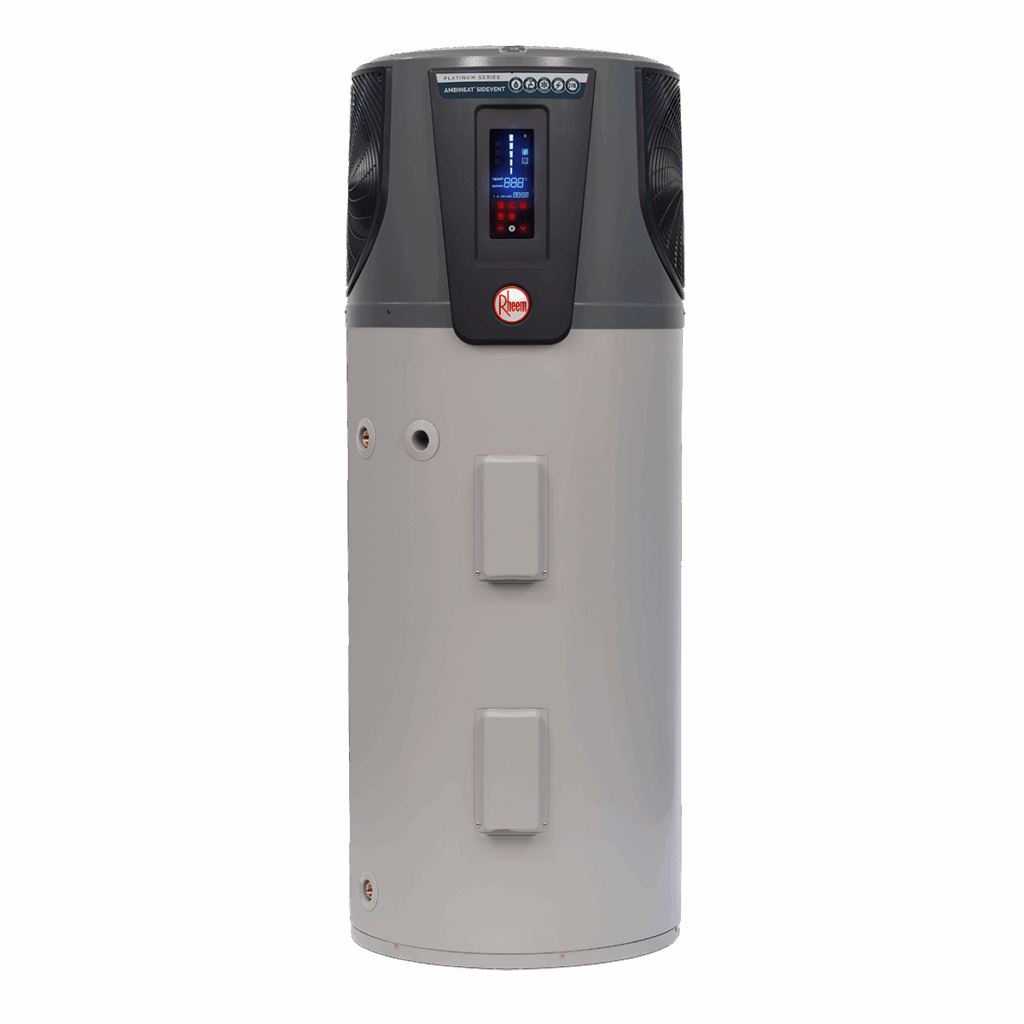
A heat pump hot water system is a tank of stored hot water paired with a small heat pump, much like the compressor unit on a split-system air conditioner. Instead of using an electric element to heat the water directly, it moves warmth out of the surrounding air and transfers it into the water. If you’ve ever felt the warm air blowing out the back of your fridge, you’ve already seen a heat pump at work: a fridge pulls heat out of its interior, and a heat pump water heater pulls heat out of the air around it.
Because the system moves existing heat rather than generating it from scratch, it uses far less electricity for the same result. According to the Australian Government’s YourHome hot water guide, heat pumps use only around a third of the energy of a conventional electric storage system. Sustainability Victoria puts the figure at roughly 60 to 75 per cent less electricity. Either way, that is a big cut to the part of your power bill that heats your water.
How Does a Heat Pump Hot Water System Work?
The clever part happens in a continuous loop that runs quietly in the background. Here is the process, step by step:
- A fan draws outside air across an evaporator coil filled with a special refrigerant.
- The refrigerant absorbs heat from the air and turns from a liquid into a gas.
- A compressor squeezes that gas, which raises its temperature sharply.
- The hot gas passes through a heat exchanger wrapped around the water tank, transferring its heat into the stored water.
- As it gives up heat, the refrigerant cools, condenses back into a liquid, and returns to the start of the loop to do it all again.
Most systems also include a small electric booster element for periods of heavy demand, so you never run short when the whole household needs hot water at once.
What happens in cold weather?
It’s a fair question, and one we hear a lot. A heat pump works a little harder as the air cools, because there is less warmth to draw on. The good news is there is more heat in cold air than you’d think: air at 0°C still holds around 90 per cent of the heat energy it has at 40°C. On the Gold Coast and across Logan, where genuinely cold mornings are rare, a quality heat pump runs efficiently almost all year round. In the coldest snaps, the backup element quietly fills any gap.
How Much Does a Heat Pump Hot Water System Cost?
Upfront and installation costs
A heat pump hot water system costs more upfront than a basic electric tank, and that is the main thing that gives people pause. As a rough guide, expect a supplied-and-installed price somewhere between about $3,000 and $4,500, depending on the size of the tank, the brand, and your site. Industry data from Solar Choice in April 2026 put the average installed cost in Queensland at around $4,191 once the federal discount (more on that below) is applied.
The size you need depends on your household. A couple might be well served by a 200 to 250 litre system, while a family of four or more usually wants 250 to 315 litres. Getting the sizing right matters: too small and you’ll run short, too large and you’ve paid for capacity you don’t use.
Running costs and savings
This is where a heat pump earns its keep. Running a heat pump hot water system typically costs around $150 to $350 a year, well below what an old electric storage tank costs to run. Because it uses roughly a third of the energy, most households save around $300 to $400 a year on the hot water part of their bill.
Here on the Gold Coast, there is an extra advantage. If you have solar panels, you can set the heat pump to run in the middle of the day when your panels are producing the most power, which can push your hot water running cost close to zero. Even without solar, running the system on an economy or off-peak tariff keeps costs low.
Heat Pump Hot Water Rebates in Queensland
Rebates can take a meaningful chunk off the upfront price, but there is a lot of out-of-date information floating around online, so it pays to know what actually applies right now.
The federal STC discount
The main incentive available to Queenslanders is a federal one: Small-scale Technology Certificates, or STCs, under the Australian Government’s Small-scale Renewable Energy Scheme. Heat pump hot water systems qualify because they harvest free heat from the air, so they are treated like solar water heaters under the scheme.
In practice, you rarely handle the certificates yourself. Your installer creates them and applies their value as an upfront discount on your quote, which is why an eligible system is often advertised at a price that already has the STC saving baked in. The exact amount depends on your system size, your postcode, and the STC market price, but it commonly works out to several hundred dollars and up to around $1,000 off. Worth knowing: the number of certificates a system earns steps down slightly every January as the scheme winds toward its scheduled end in 2030, so waiting doesn’t get you a better deal. You can read more on the energy.gov.au rebates page.
Queensland and local incentives
Queensland’s previous state rebate for energy-efficient appliances, the Climate Smart Energy Savers program, is now closed, so at the time of writing there is no dedicated statewide cash rebate for household heat pump hot water systems in Queensland. Be wary of websites still advertising it. Eligible small and medium Queensland businesses may still be able to access support through the Queensland Business Energy Saving and Transformation (QBEST) scheme when replacing an old electric or gas storage system, so it is worth checking current eligibility if the upgrade is for a commercial premises.
Because incentives change, ask your installer for a written quote that lists the STC discount as a separate line item, so you can see exactly what you are paying and saving.
Is a Heat Pump Hot Water System Right for Your Home?
For most homes on the Gold Coast and in Logan, a heat pump is one of the smartest hot water choices going. The mild climate suits the technology, the running savings are real, and it pairs beautifully with solar. It isn’t automatically right for every property, though. The unit needs a well-ventilated outdoor spot, and it makes some noise when the fan and compressor run, similar to an air conditioner, so a little thought about placement away from bedroom windows and close neighbours goes a long way. The upfront cost is higher than a like-for-like electric tank, but the lower running cost usually makes up the difference over the system’s life of around 10 to 15 years.
If you are weighing up your options, it helps to compare the different efficient systems side by side. Our guide to the top energy-efficient hot water systems for homes walks through the main types. And if you are replacing an existing gas hot water unit, remember that disconnecting gas is work for a licensed gas fitter, which is something our gas plumbing team is fully licensed and qualified to handle safely.
Frequently Asked Questions
How long does a heat pump hot water system last?
Most quality heat pump hot water systems last around 10 to 15 years, which is comparable to or better than a standard electric or gas storage tank. A simple check-up every year or two helps it run efficiently and catches small issues before they turn into expensive ones.
Are heat pump hot water systems noisy?
They make a low hum while running, on par with a split-system air conditioner, and only for part of the day. Modern units are much quieter than older models, and placing the unit away from bedrooms and shared boundaries keeps it from being a nuisance.
Do heat pump hot water systems work in winter?
Yes. They keep working in cold weather because there is still usable heat in cool air. Efficiency dips a little on very cold mornings, and the built-in electric booster covers any shortfall. In South East Queensland’s mild climate, this is rarely a concern.
Can I run a heat pump hot water system on solar power?
You can, and it is a great combination. Setting the system to heat during daylight hours lets it soak up the power your solar panels are generating, which can cut your hot water running cost dramatically. Many systems have a built-in timer to make this easy.
Is it worth switching from electric or gas to a heat pump?
For most Gold Coast and Logan homes, yes. The higher upfront cost is usually outweighed over time by the running savings, the federal STC discount, and the long lifespan. A proper assessment of your home and hot water use is the best way to be sure.
Thinking About Making the Switch?
A heat pump hot water system is one of the few home upgrades that pays you back every single day through a lower power bill, and in a climate like ours it makes a lot of sense. The key is choosing the right size and having it installed properly by a licensed team.
If you’d like honest advice on whether a heat pump suits your place, or a quote on supply and installation, have a look at our hot water systems service or get in touch with the team. We’ve been keeping Gold Coast and Logan homes in hot water since 1978, and we are always happy to talk it through.