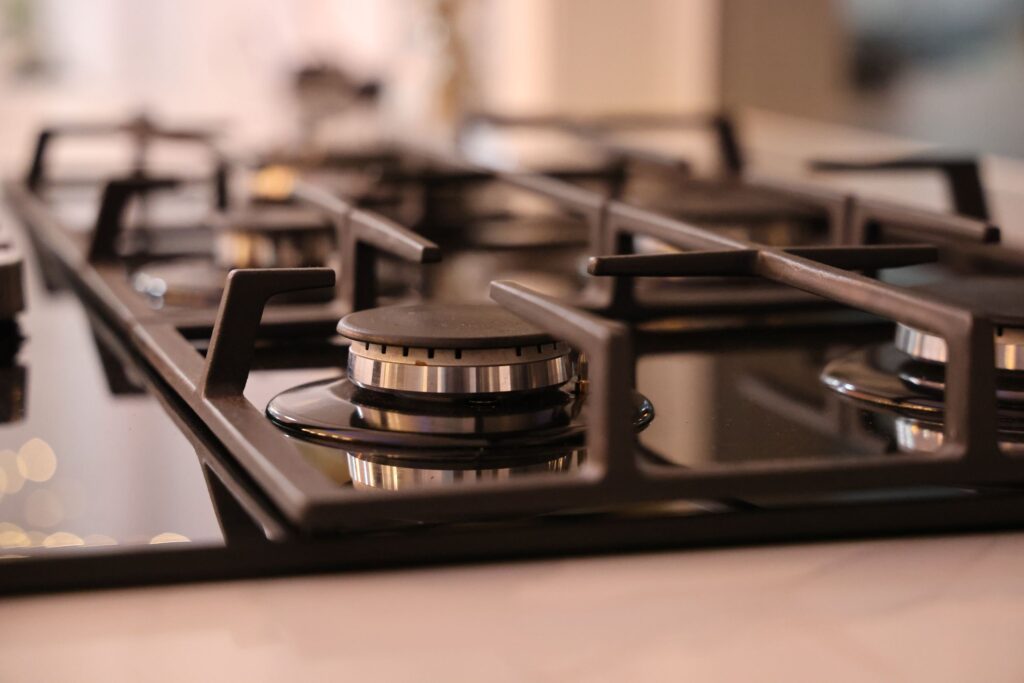
You’ve picked the new cooktop, measured the bench twice, and maybe watched a video that makes the swap look like a twenty-minute job. Before anyone reaches for a spanner, it helps to know what gas cooktop installation actually involves in Queensland, what it should cost, and why the law leaves no room for a handy mate with a shifter.
Most guides online are written by appliance retailers or by gas fitters in Victoria, where the rules and the regulator are different. This one is written for Queensland homes. It covers realistic Gold Coast and Logan pricing, the steps a licensed gas fitter follows on the day, the sections of the Petroleum and Gas (Production and Safety) Act 2004 that make the work licensed-only, and the gas compliance certificate you’re entitled to when the job is finished.
We’ve been doing gas work across the Gold Coast and Logan since 1978. Here’s how the job looks from our side of the bench.
What Gas Cooktop Installation Covers
Not every cooktop job is the same job. Most fall into one of three categories, and the category decides most of the price.
- Like-for-like swap: the new cooktop fits the existing cut-out, runs on the same gas type, and connects to the gas point that’s already there. This is the quickest and cheapest version.
- Swap with changes: the new unit is wider, sits in a different spot, or the existing connection is old, undersized or in an awkward place. Expect some benchtop or pipe work on top of the install.
- New gas install: you’re moving from electric or induction to gas, or the kitchen has never had a gas point. That means running a new gas line from the meter or LPG cylinders, fitting a connection point, then installing the cooktop.
Freestanding gas stoves and ovens follow the same pattern. Whichever one you’re facing, every version counts as gas work under Queensland law, including pulling the old cooktop out.
How Much Does Gas Cooktop Installation Cost?
For a straightforward like-for-like swap on the Gold Coast or in Logan, most homeowners pay somewhere between about $250 and $450. One national appliance retailer currently advertises a like-for-like gas cooktop connection at $360, right in the middle of that band.
The figure climbs once the job moves beyond a straight swap. These are typical market ranges across South East Queensland, not our price list.
| Item | Typical cost range | When you’ll need it |
|---|---|---|
| Like-for-like cooktop swap | $250 to $450 | Same size, same gas type, existing connection in good order |
| New gas bayonet or connection point | $250 to $650 | No suitable connection, or the old one needs replacing |
| New gas line run | $500 to $2,000 | Electric-to-gas changeovers, or moving the cooktop to a new spot |
| Enlarging the benchtop cut-out | From about $150 (timber) to $350 (stainless steel) | The new cooktop needs a bigger hole; stone benchtops need a stonemason |
| Converting the cooktop between LPG and natural gas | From about $220 | The cooktop is set up for the wrong gas type |
| New power point for the ignition | From about $200 | No power point within reach of the cooktop’s lead (electrician’s work) |
Add the pieces together and a full electric-to-gas changeover can easily pass $1,000, and it can run past $3,000 on a long or awkward pipe run under a slab or up through a two-storey home.
How to keep the cost down
- Measure the cut-out before you buy: matching the existing hole avoids benchtop work. Use the cut-out dimensions in the installation manual, not the advertised width.
- Buy for your gas type: confirm whether your home runs on natural gas or LPG bottles, and buy a cooktop set up for it.
- Bundle the gas work: if a gas hot water service or outdoor bayonet is also on the list, one visit saves a second call-out.
- Get a fixed quote in writing: and check it includes leak testing, commissioning and the compliance certificate.
The Gas Cooktop Installation Process, Step by Step
Here’s the sequence a properly run job follows, whether it’s a quick swap or a brand new gas point.
- Site check: confirm the gas type, inspect the existing connection, and measure the cut-out and clearances against the new cooktop’s manual.
- Isolate the gas: shut off supply at the isolation valve or meter, then test that it’s off.
- Remove the old cooktop: disconnect it and make the line safe. Disconnecting a gas appliance is gas work in its own right.
- Prepare the bench: clean or adjust the cut-out and fit the sealing gasket.
- Connect and secure: clamp the cooktop in place and connect it with approved fittings, set up for your gas type.
- Leak and pressure test: every joint is tested before the cooktop is used.
- Commission: light each burner and check for a steady blue flame, correct pressure and reliable ignition.
- Certify: issue the gas compliance certificate before leaving.
Why a simple swap can turn into a bigger job
The most common surprise is the rangehood. Queensland moved to the 2022 edition of AS/NZS 5601.1, the national gas installation standard, from 30 March 2023, and that edition tightened the overhead clearances. Where a cooktop is replaced in an existing kitchen, the gap from the highest burner to the rangehood generally needs to be at least 600 mm. In a new kitchen or a renovation with new cupboards and a new rangehood, it’s at least 650 mm measured from the trivet, or more if the cooktop or rangehood manufacturer asks for it.
If your rangehood sits lower than that, something has to move before the job can be certified. It’s far cheaper to find that out at the quote than on installation day.
Why Queensland Law Says Only a Licensed Gas Fitter Can Do It
This is the part most cost guides skip, and it’s the part that can cost you far more than the cooktop.
What the Act actually says
Section 725 of the Petroleum and Gas (Production and Safety) Act 2004 defines gas work as installing, removing, altering, repairing, servicing, testing or certifying a gas system. A domestic gas cooking appliance is listed as a type A gas device in Schedule 1 of the Petroleum and Gas (Safety) Regulation 2018, so installing a cooktop, and even disconnecting an old one, is gas work.
Section 726 then says a person must not carry out gas work on a type A device unless they hold a gas work licence that covers it. The maximum penalty is 500 penalty units, which works out to $86,350 at Queensland’s penalty unit value of $172.70 from 1 July 2026. The same maximum applies to anyone who directs a worker to do that gas work without the right licence.
If the work causes harm, section 732 lifts the ceiling sharply. Death or grievous bodily harm to one person carries up to 3,000 penalty units ($518,100) or two years in prison.
These cases do reach court. In a 2021 prosecution in the Maroochydore Magistrates Court, a restaurant company director had disconnected a fryer himself and left the pipe unsealed. A 17-year-old worker later turned the valve back on, and the gas exploded when he lit the fryer, burning 17% of his body. That disconnection was gas work under section 725, and the director was fined and ordered to pay compensation. Pulling out an old cooktop carries the same kind of risk.
Unlicensed work also gives your insurer a reason to question a fire or gas damage claim. Our guide on why every gas appliance needs a licensed gas fitter covers the wider list of appliances caught by the same rules.
You have obligations as the owner, too
The law doesn’t only bind the person holding the spanner. Under section 97 of the Regulation, the owner of a gas system must take all reasonable steps to make sure a gas work licence holder does the installation, servicing and repair work, with a maximum penalty of 20 penalty units ($3,454). “Owner” here includes someone in possession under a lease, so renters are covered too. Checking the licence before you book is the simplest way to meet that obligation.
The one gas job you can legally do yourself
Section 726(4) carves out a single exception: connecting or disconnecting a gas cylinder to an existing gas fitting or gas device. Swapping an empty LPG bottle is fine. Anything past the cylinder connection, including the cooktop itself, is licensed work.
Your Gas Compliance Certificate: What You Should Receive
Section 734(3) of the Act requires anyone who installs all or part of a gas system to give a certificate in the approved form, with a maximum penalty of 300 penalty units for not doing so. For a home, section 95 of the Regulation says the licensed gas fitter must give the gas compliance certificate to the owner when they finish the installation, and to the relevant gas network operator within five business days.
A few things worth knowing about that certificate in 2026:
- It’s due at the end of the job: if you’re told it will turn up sometime later, ask why.
- It’s digital now: Resources Safety and Health Queensland moved certificates onto its online portal, and hard copy certificate books could only be used until 1 January 2026. Expect a PDF, not a carbon copy.
- You may not get a plate: the requirement to fix a physical compliance plate was removed from the Regulation in mid-2025 for most installations, with caravans the main exception. No plate on a new cooktop isn’t a red flag. No certificate is.
- Keep it with your property records: it’s your evidence the work was done by a licensed person, which matters if you sell, rent the property out or make an insurance claim.
How to Check Your Gas Fitter Is Licensed
Gas work licences in Queensland are issued through Resources Safety and Health Queensland, not the QBCC. A plumbing licence on its own doesn’t cover gas work, so a plumber who isn’t also gas licensed can’t legally connect your cooktop.
- Ask for the gas work licence number before you book. A licensed gas fitter will give it to you without any fuss.
- Search it on the Queensland register of gas work licences. The public search on the RSHQ Portal doesn’t need an account and shows whether the licence is current.
- Ask who will actually do the work, and check that person’s licence too.
- Confirm the quote includes leak testing, commissioning and the compliance certificate.
Our gas plumbing team holds Queensland gas work licences, and we’re happy to give you the licence number before we arrive.
Frequently Asked Questions
Can I install my own gas cooktop in Queensland?
No. Installing or disconnecting a gas cooktop is gas work, and section 726 of the Act requires a gas work licence for it, with a maximum penalty of 500 penalty units. The only gas job a homeowner can legally do is connecting or disconnecting a gas cylinder to an existing fitting.
How long does gas cooktop installation take?
A like-for-like swap onto an existing connection usually takes one to two hours, including leak testing and commissioning. If a new gas line, connection point or benchtop modification is needed, allow half a day or more, and longer again if a stonemason or electrician has to attend first.
Does a gas cooktop need electricity?
Most modern gas cooktops use mains-powered electronic ignition, so they need a power point within reach of the supply cord. Some models use a battery igniter instead. Check the installation manual before you buy, because adding a power point is a job for a licensed electrician, not a gas fitter.
Can a gas cooktop be converted from LPG to natural gas?
Usually, yes. Most cooktops can be converted by changing the injectors and adjusting the settings, often with a kit supplied by the manufacturer. The conversion is gas work, so it has to be done and certified by a licensed gas fitter.
Do I need a compliance certificate for a like-for-like replacement?
Yes. The Act’s own examples of a gas system include a gas device added to an existing system, so replacing a cooktop is installing part of a gas system. Section 734 applies, and the gas fitter must issue a gas compliance certificate when the job is finished.
Book a Licensed Gas Fitter on the Gold Coast or Logan
Charlie The Plumber has been installing gas appliances on the Gold Coast and in Logan since 1978. We’re family owned rather than a franchise, we work on natural gas and LPG, and every job comes with upfront pricing, a full leak test, your compliance certificate on the day and our 12-month workmanship guarantee. Renovating the whole kitchen? Our domestic plumbing team can handle the dishwasher and sink in the same visit. Have a look at our gas plumbing services, or get in touch for a fixed quote.