If you’re building, renovating or just sick of swapping gas bottles, the LPG vs natural gas question comes up fast. Both fuels run the same kinds of appliances (cooktops, ovens, hot water units, heaters and BBQs), but they’re delivered differently, billed differently and they aren’t interchangeable. Hook a natural gas appliance up to an LPG bottle and you’ve got a real safety problem.
Most guides on this topic are written by companies selling one fuel or the other. We don’t sell gas. We’re licensed gas fitters who have been working on Gold Coast and Logan homes since 1978, so this guide sticks to what matters when you’re choosing: how much energy you get per dollar in megajoules (MJ), what bottle rental and daily supply charges add up to, and why switching fuels is a job for a licensed gas fitter, not a weekend project.
What Is LPG?
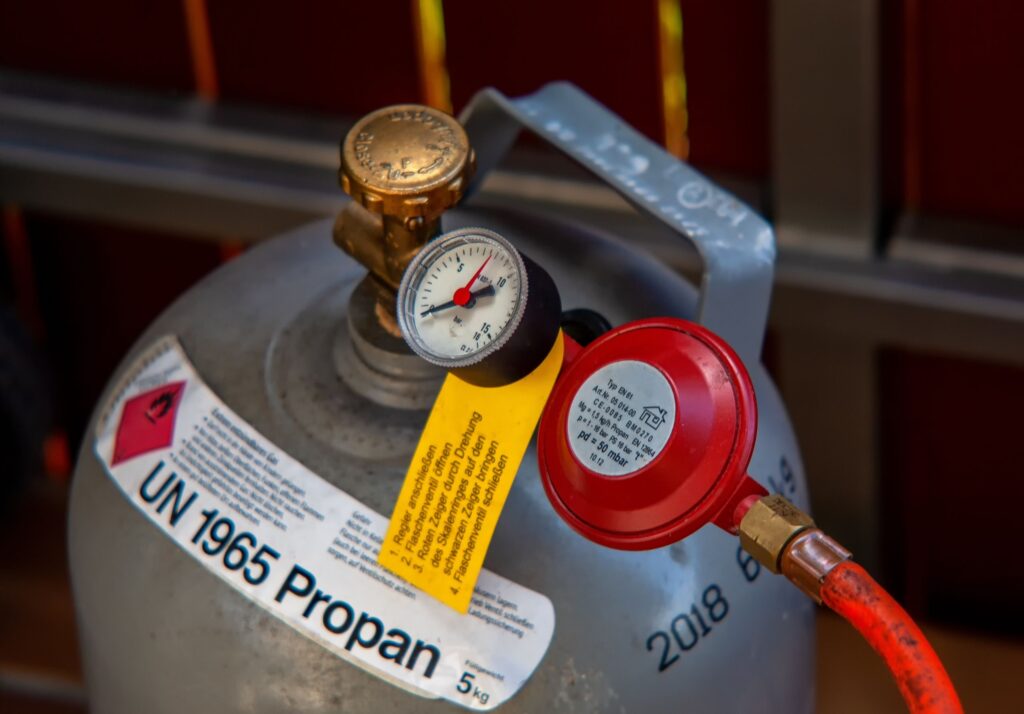
LPG stands for liquefied petroleum gas. In Australian homes it’s mainly propane, stored as a liquid under pressure inside a cylinder. When you turn on an appliance, some of that liquid boils off into gas and flows to the burner.
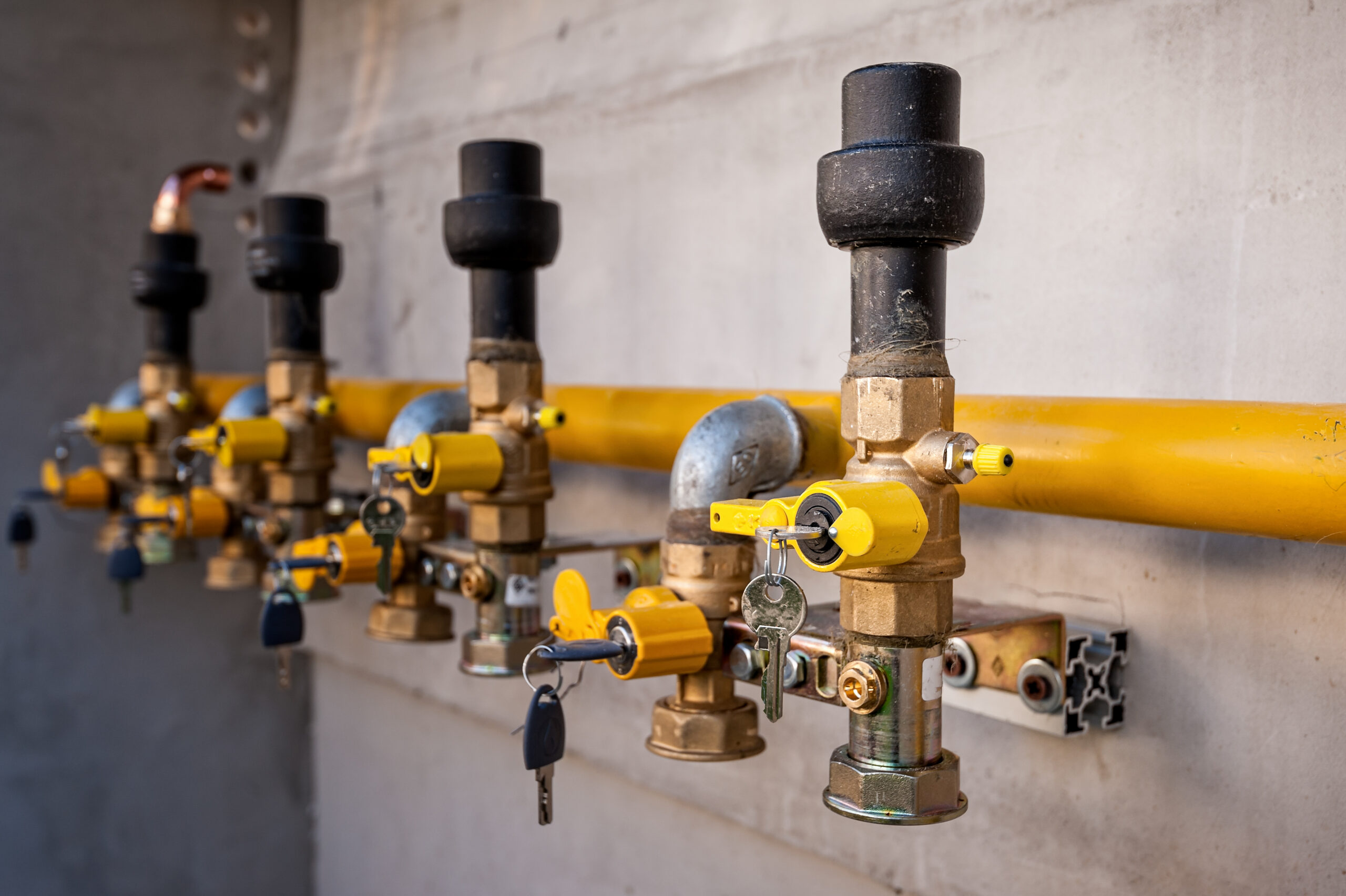
A typical Queensland home on LPG runs two 45 kg bottles connected through a changeover regulator. When one bottle runs dry, the regulator switches to the full one and you call your supplier for a swap. Smaller 9 kg bottles are the ones you’d use on a portable BBQ or patio heater.
What Is Natural Gas?
Natural gas is mostly methane. It’s piped underground through a distribution network to a meter at your property, so there are no bottles to order. You pay a retailer for the energy you use, measured in megajoules, plus a fixed daily supply charge whether you use any gas that day or not.
The catch is availability. As the Queensland Government’s guide to choosing a gas retailer points out, not all Queensland homes have access to mains natural gas. On the Gold Coast the network is run by Allgas, but coverage is street by street. That’s why LPG is so common across the Gold Coast, Logan and the hinterland.
LPG vs Natural Gas: Key Differences
| Feature | LPG | Natural gas |
|---|---|---|
| Main ingredient | Propane | Methane |
| How it gets to you | Cylinders delivered or swapped on site | Underground pipe network to a meter |
| Energy content | 25.7 MJ per litre of liquid (about 2,250 MJ in a 45 kg bottle) | 39.3 MJ per cubic metre of gas |
| Typical appliance pressure | About 2.75 kPa | About 1 kPa |
| Fixed costs | Annual cylinder rental per bottle | Daily supply charge on every bill |
| If it leaks | Heavier than air, pools in low spots and drains | Lighter than air, rises and disperses |
| Availability | Anywhere a truck can reach | Only where mains run past your property |
| Running out | Possible if you don’t keep a spare bottle connected | Continuous supply |
That leak behaviour matters. The Queensland Government’s gas safety advice notes that LPG can pool in low areas and drains, while natural gas tends to rise. Both have an odourant added so you can smell a leak, and both need the same respect.
Energy Content and Running Costs: The Megajoule Maths
Comparing “a bottle” with “a bill” is how people get caught out. The fair way to compare LPG and natural gas is cost per megajoule, because every gas appliance is rated by how many MJ it burns per hour.
The Australian Government’s National Greenhouse Accounts Factors put LPG at 25.7 MJ per litre and pipeline natural gas at 39.3 MJ per cubic metre. A 45 kg bottle holds roughly 88 litres of liquid LPG, which works out to about 2,250 MJ of energy.
Here’s how that plays out with Gold Coast prices in October 2026:
- LPG: 45 kg bottles typically cost around $120 to $170 delivered, which is roughly 5.3 to 7.5 cents per MJ. Most suppliers also charge an annual rental on each cylinder.
- Natural gas: market plans on the Allgas network were charging about 2.75 to 4.35 cents per MJ, plus a supply charge of roughly $1.01 to $1.31 a day. That’s around $370 to $480 a year before you light a single burner.
So natural gas is cheaper per megajoule, but you pay that daily charge no matter how little you use. Here’s a worked example using mid-range figures: 3.55 c/MJ and $1.16 a day for natural gas, and $145 a bottle plus $90 a year rental on two cylinders for LPG.
| Annual gas use | About how many 45 kg bottles | Natural gas cost per year | LPG cost per year |
|---|---|---|---|
| 3,000 MJ | 1.3 | $530 | $282 |
| 10,000 MJ | 4.4 | $778 | $729 |
| 20,000 MJ | 8.8 | $1,133 | $1,369 |
On those numbers the two fuels break even at around 11,700 MJ a year, or about five 45 kg bottles. Shift the prices to the ends of the ranges and that crossover moves to anywhere between roughly four and eight bottles a year. A simple rule of thumb: if your home gets through fewer than four bottles a year, LPG is usually the cheaper option. If you’re burning through eight or more, natural gas usually wins. In between, grab your last few bills and run your own numbers.
These figures cover running costs only. If mains gas runs past your property but you’re not connected, budget for the network connection, meter and new pipework, plus converting any appliances you plan to keep.
How to Tell Whether Your Home Uses LPG or Natural Gas
Not sure what you’ve got? Check these three things:
- Look outside. Gas bottles against an external wall mean LPG. A meter with a pipe running in from the street usually means natural gas.
- Check your bill. A natural gas bill from a retailer shows MJ used and a daily supply charge. LPG customers get invoices for bottle deliveries and rental.
- Read the appliance data plate. Every certified gas appliance has a plate or sticker stating which gas it’s set up for, usually “NG” or “Natural Gas”, or “ULPG” or “Propane” for LPG.
Some estates and apartment buildings run piped LPG from a central tank, so a meter on its own isn’t proof of natural gas. When in doubt, the data plate is the final word.
Switching Between LPG and Natural Gas: Why a Licensed Gas Fitter Must Convert Your Appliances
This is the part most comparison guides gloss over. A gas appliance is built and certified for one gas type. Because LPG carries more energy per cubic metre and runs at higher pressure, an LPG appliance uses smaller injectors (jets) and different regulator settings than the same model set up for natural gas. Connect a natural gas appliance to an LPG bottle without converting it and you risk oversized flames, incomplete combustion and carbon monoxide.
Converting an appliance properly usually involves:
- Confirming the appliance is certified for the other gas type. Some models can’t be converted at all.
- Fitting the manufacturer’s approved conversion kit, which typically means new injectors and a change to the regulator or gas valve settings.
- Checking the pipework is sized for the new gas. Natural gas runs at lower pressure, so a home switching from LPG may need larger pipes to feed the same appliances.
- Testing burner pressures, flame quality and the whole system for leaks.
In Queensland this isn’t optional. The Queensland Government states that all gas installations and conversions must be carried out by a licensed gasfitter. Household appliances such as cooktops, ovens, heaters and gas hot water units are classed as type A gas devices, and the Queensland gas work licence requirements set by Resources Safety and Health Queensland make it clear that anyone doing gas work on a type A device must hold a current gas work licence. Once the job’s done, your gas fitter should issue you a Gas System Compliance Certificate. Hang on to it.
If you’re thinking about switching, our licensed LPG and natural gas fitters can check whether your appliances are certified for conversion, size the pipework and handle the changeover from start to finish. For more on why the licence matters, read our guide on why you need a licensed gas fitter for gas appliances.
When to Choose LPG
LPG makes the most sense when:
- Mains gas doesn’t run past your property.
- You only use gas lightly, such as a cooktop or a BBQ, and don’t want to pay a daily supply charge all year.
- You want gas somewhere the network can’t reach, such as an outdoor kitchen, patio heater or caravan.
- You’re happy to keep an eye on your bottles and order a swap when the changeover kicks in.
When to Choose Natural Gas
Natural gas is usually the better fit when:
- You’re already connected, or mains gas runs past your property and the connection cost stacks up.
- You’re a heavy gas user. Gas hot water systems, ducted heating and pool heaters burn enough megajoules that the lower per-MJ rate outweighs the supply charge.
- You never want to run out mid-shower or mid-roast.
- You don’t have the space for two 45 kg cylinders, which need clear room outside with good ventilation.
Frequently Asked Questions
Is LPG the same as natural gas?
No. LPG is mainly propane stored as a liquid in cylinders, while natural gas is mainly methane delivered through underground pipes. They burn at different pressures and air mixes, so an appliance must be set up for the specific gas it’s connected to.
Can I use LPG on a natural gas BBQ, heater or stove?
Not without converting it first. A natural gas appliance has larger injectors designed for lower pressure, so running it on LPG can produce dangerous oversized flames and carbon monoxide. If the appliance is certified for LPG, a licensed gas fitter can fit the manufacturer’s conversion kit.
Can you convert a natural gas appliance to LPG, or LPG to natural gas?
Often, yes, but only if the manufacturer certifies the model for both gases and offers an approved conversion kit. Many cooktops, ovens, heaters and continuous flow hot water units can be converted. In Queensland, the conversion must be done by a licensed gas fitter, who then issues a compliance certificate.
Does LPG burn hotter than natural gas?
Not in any way you’ll notice in the kitchen. LPG holds more than double the energy of natural gas per cubic metre, but a correctly converted appliance is set up to deliver the same rated output in MJ per hour on either fuel. What changes is how much gas it uses to get there.
Is LPG cheaper than natural gas?
Per megajoule, natural gas is usually cheaper. LPG often works out cheaper overall for light users because there’s no daily supply charge. Based on October 2026 Gold Coast prices, the crossover sits somewhere between four and eight 45 kg bottles a year.
Verdict: Which Is Right for Your Home?
If mains gas is available and you use a lot of it, natural gas usually comes out ahead on running costs and convenience. If you’re a light user, have no mains connection, or want gas in places the pipes can’t reach, LPG is hard to beat. Either way, the switch itself should never be a DIY job.
Charlie The Plumber has been looking after Gold Coast and Logan homes for more than 45 years, and our licensed gas fitters work on both LPG and natural gas systems. Whether you need a gas plumber on the Gold Coast or a gas fitter in Logan, we’ll give you a clear answer on which fuel suits your home and what switching would involve. Get in touch with our team to book a visit.