There is never a good time for a blocked toilet, least of all the moment the water starts rising instead of going down. Before you reach for the drain cleaner under the sink, know this: most blockages clear with patience and the right technique. Knowing how to unblock a toilet is mostly about doing the simple things in the right order, and knowing when to stop.
We have been clearing blocked toilets across the Gold Coast and Logan since 1978, and we have seen every DIY fix going, including the ones that turn a fifteen-minute job into a pipe repair. Here are six methods that work, in the order we would try them, plus the mistakes worth avoiding. Grab rubber gloves and lay old towels around the base before you start.
First, Stop the Water Before It Goes Everywhere
If the bowl is filling, do not flush again. A second flush sends another full cistern into a bowl that has nowhere to drain.
Lift the cistern lid and push the flapper (the rubber seal at the bottom) down over its opening. If you cannot reach it, turn the small isolation tap behind the toilet clockwise. Then wait. The level often drops on its own, which tells you the blockage is partial rather than solid.
Method 1: A Plunger, Used Properly
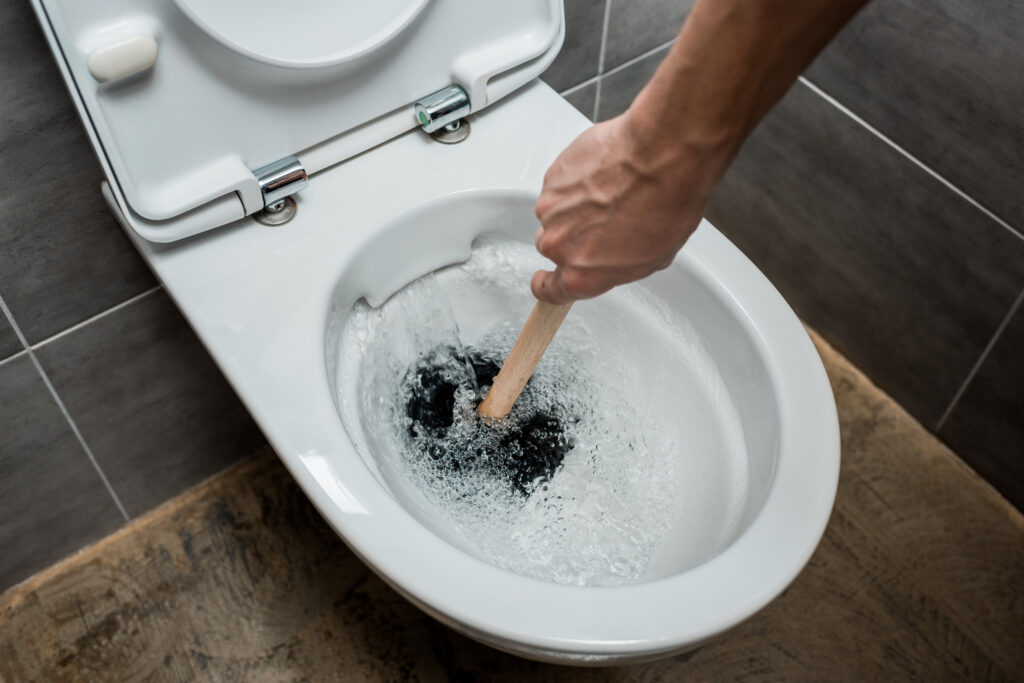
The plunger clears more blockages than every other method combined, but only with the right one. You want a toilet plunger with a soft rubber flange that folds out of the cup, not a flat sink plunger. That flange is what seals the curved outlet at the bottom of the bowl.
Make sure there is enough water to cover the rubber, because plunging air does nothing. Press gently on the first push to expel trapped air, then work it firmly up and down for about 20 seconds, keeping the seal intact. The pull does as much work as the push. If it drains, tip in a bucket of water to confirm the pipe is clear before flushing.
Method 2: Hot Water and Dishwashing Liquid
Good for toilet paper and organic waste, and worth trying if you have no plunger. Bail out some water, squeeze in half a cup of dishwashing liquid, and give it 10 minutes to lubricate the blockage. Then pour in two to three litres of hot water from a height, fast enough to create downward force.
Hot, not boiling. Boiling water in a cold ceramic bowl can crack the porcelain, and a new pan costs far more than a blocked one.
Method 3: Bicarb Soda and Vinegar
The pantry fix. Gentler than a chemical cleaner and safe on pipes and septic systems, but slow.
Remove enough water that the bowl is part full. Tip in a cup of bicarb soda, then add two cups of white vinegar slowly or you will wear the fizz. Leave it 30 minutes, or overnight for a stubborn one, then follow with hot water. This suits soft, paper-based blockages only. It will not shift a toy, a nappy or a wad of wet wipes.
Method 4: A Toilet Auger
A toilet auger, also called a closet auger or toilet snake, is a coiled cable with a crank handle and a rubber sleeve at the bend. Hardware stores sell them for around $30, and it is the most useful tool a homeowner can own for this job.
Feed the end into the outlet and crank to extend the cable. When you hit resistance, keep cranking. You are either breaking the blockage up or hooking it to draw back out. Retract slowly, then flush to test. Buy the proper toilet version rather than a general drain snake: the rubber sleeve stops the cable scratching the bowl, and those scratches trap waste and cause the next blockage.
Method 5: A Wet and Dry Vacuum
A shop vac will pull out an object that a plunger only pushes further in. Vacuum the standing water out first, wrap an old towel around the hose where it meets the outlet to form a seal, then run it in suction mode. This is the method for a lost toothbrush, a toy or a phone. Sanitise everything afterwards, and never use a household vacuum.
Method 6: An Enzyme Drain Treatment
Enzyme treatments use bacteria to digest organic matter. They take hours rather than minutes, so this is an overnight job for a slow-draining toilet, not an emergency fix. Pour the dose in before bed and leave it. Enzymes also work as ongoing maintenance in older homes with sluggish drains, and unlike caustic products they will not damage pipes or a septic system.
How to Unblock a Toilet Without a Plunger
Methods 2, 3, 5 and 6 all work without one. Hot water with dishwashing liquid is fastest and uses what you already have. Reach for the wet and dry vacuum if you suspect a solid object went down. What you should not do is improvise with a straightened coat hanger, for reasons below.
The Mistakes That Turn a Blockage Into a Pipe Repair
These are the ones we get called out to fix, and they cost far more than the original problem.
- Caustic drain cleaners: they generate heat, damage older pipework and seals, and do nothing to a solid object. If they fail, your plumber has a pipe full of caustic liquid to work in.
- Boiling water from the kettle: thermal shock cracks ceramic. Hot from the tap is enough.
- A coat hanger down the bowl: bare wire scratches the glaze and usually packs the blockage tighter.
- Flushing repeatedly to test: every flush adds water to a bowl that cannot drain. That is how bathrooms flood.
- Pressure washers and garden hoses: forcing water into a sealed drain can push waste back through other fixtures or blow a joint apart.
- Ignoring a blockage that keeps returning: a toilet that blocks monthly is telling you about the drain, not the toilet.
Worth knowing where the legal line sits in Queensland, too. Plunging or augering is fine, but the QBCC’s list of unregulated plumbing work is narrow. Pulling the pan off, opening drains or altering pipework must be done by a licensed plumber, and unlicensed work can give your insurer grounds to decline a water damage claim.
When the Problem Is Not the Toilet
Sometimes the toilet is just where the symptom shows up. Look for these signs:
- Other fixtures gurgle or bubble when you flush
- The shower or laundry tub drains slowly at the same time
- Water rises in the shower base when the toilet is flushed
- Smell or pooling water around the overflow relief gully outside
- The same toilet blocks again within weeks of being cleared
Any of these point to the main sewer line rather than the pan. Around the Gold Coast and Logan, tree roots are the usual culprit. They find hairline cracks and old joints, grow inside the pipe, and catch everything passing through. Wipes are the other big one. The ACCC notes that water authorities and plumbers agree only three things belong down a toilet, and wipes are not among them. In South East Queensland, Urban Utilities pulls roughly 120 tonnes of wipes from the network each year and clears around 3,500 sewer blockages.
When a blockage keeps returning, the fix is finding out why. A CCTV pipe inspection puts a camera through the line and shows exactly what is down there. Our blocked drains, sewer and stormwater service covers the clearing and the diagnosis.
Frequently Asked Questions
Will a blocked toilet eventually unblock itself?
Sometimes. Toilet paper and organic waste may soften and break down over several hours. Anything that does not dissolve, such as wipes, sanitary products or a toy, will stay put and generally worsens as waste collects behind it.
Why does my toilet keep blocking?
Repeated blockages almost always mean a fault further down the line: tree roots, a collapsed or misaligned pipe, a build-up of wipes and fat, or a section of drain that has lost its fall. Clearing it without finding the cause just resets the clock.
Can I use caustic soda or Drano in a toilet?
We would not. Those products are designed for sinks, not toilet pans, and they struggle with the bulky blockages toilets get. They can damage seals and older pipes, and create a hazard for whoever works on the drain next. A plunger or auger is more effective and carries no risk.
How much does a plumber charge to unblock a toilet?
It depends on the cause and how accessible the drain is. A straightforward pan blockage cleared on site sits at the lower end. A main line blockage needing a camera and drain machine costs more, and Urban Utilities has put a CCTV inspection plus clearing at roughly $400 to $500 as a starting point. We always tell you what we have found before going further.
Is it safe to keep using other taps while the toilet is blocked?
If only the toilet is affected, yes. If other fixtures are gurgling or draining slowly, stop using water in the house and call a plumber. That pattern suggests the main line is blocked, and adding water risks sewage backing up through the lowest fixture, usually the shower.
Still Blocked? Give Us a Call
If you have worked through the methods above and the water is still sitting there, stop before you make it worse. A blockage that will not shift with a plunger and an auger is usually further down the line than any home tool reaches.
Charlie The Plumber has been sorting out blocked toilets for Gold Coast and Logan homes since 1978. We are a family-owned team rather than a franchise, and we bring the drain cameras, jetters and relining gear to fix the cause instead of the symptom. We can sort out any leaking taps and toilets while we are there. Get in touch and we will get it flowing again.